TOO MUCH CAFFEINE?
Posted on
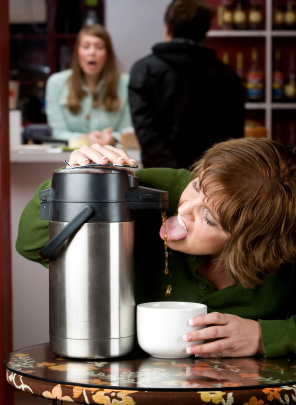 If you’re like me, than you really enjoy a freshly brewed espresso coffee. I make myself a large skinny cappuccino every morning with my breakfast. It’s pure bliss.
My home espresso machine from my husband ‘just because’, is the gift that keeps on giving. Everything about a perfectly brewed coffee is just bliss, except the caffeine. I recently took a break from drinking coffee and was surprised at how dependent on caffeine I really was.
Caffeine is a naturally occurring stimulant found in foods such as coffee, tea, cocoa and guarana. It’s also added to ‘energy drinks’ such as Red Bull and Mother and can be taken in the form of medication.
Its effects on the body include an increased heart rate, dilated blood vessels, the relaxation of smooth muscle (muscles in the digestive system etc) and the release of fatty acids into the blood stream which can suppress your appetite. It actually acts on the body just like illegal drugs do, but due to it’s relatively harmless effect, it’s still legal. Thank goodness!
In our booming cafe culture, caffeine plays a significant role. We feel less fatigued, more alert and better able to concentrate. It helps us feel like we can keep up with life’s busy pace.
Although the effects of caffeine are generally harmless, it is possible to have too much of a good thing.
Caffeine overload may cause insomnia, an upset stomach, heartburn or tachycardia (a rapid heart-rate) and people my also experience anxiety, irritability or the ‘jitters’. The volume of caffeine that causes these symptoms varies for different people. If you drink large amounts of coffee all day, every day, it’s possible to build up a tolerance and not experience any symptoms at all, despite your large caffeine intake.
When it comes to most things to do with nutrition and healthy eating, I find that balance is needed when consuming certain food and drinks. It can be counter-productive to label different foods as ‘good’ or ‘bad’. Just learn to strike a healthy balance.
If you choose to drink caffeinated beverages, just drink them in moderation. There are case studies of young adults who have died from caffeine-induced cardiac arrhythmia after consuming energy drinks, however 1 or 2 cups of coffee a day is not likely to put you at any such risk. It’s recommended to keep your caffeine intake to around 300mg per day. Even this may be too much for some people, so just go with what your body feels.
Caffeine and Pregnancy
If you are pregnant or planning to be sometime in the future, it may be worth taking stock of your caffeine intake and reduce it if need be.
A high intake of caffeine (more than 500mg) may make it difficult to fall pregnant and can also affect the fetal heart rate, it’s breathing and decrease blood flow to the placenta. The fetus doesn’t have the ability to detoxify caffeine, like adults can, and newborns of heavy caffeine users may go through withdrawals at birth. There may also be a link between caffeine intake and the rate of miscarriage.
In saying that, there is very little evidence that consuming caffeine during pregnancy has a lasting, detrimental affect on your baby; so with all things, exercise caution and strike a healthy balance. Aim to keep your caffeine intake during pregnancy to 100-200mg and no more than 300mg per day.
Caffeine and Bone Health
A high caffeine intake can also be detrimental to your bone health if it’s sustained over a long period of time.
Continually overloading your body with caffeine will ‘leach’ calcium from your bones and into your urine, putting you at an increased risk of developing osteoporosis later on in life.
As women, we are at an increased risk of osteoporosis purely due to our hormones so it’s worth taking the steps now to ensure good bone health. Adequate calcium intake, regular exercise and a healthy caffeine intake are all important lifestyle factors that help us maintain healthy bones.
How to Monitor you Caffein Intake
A healthy level of caffeine intake, associated with no significant health problems, is about 300mg per day. This is equivalent to 3 cups of instant coffee or 2 espresso coffees (cappuccino, flat white, latte, long black etc).
If you’re not a coffee drinker than it’s equivalent to 3 x 250ml energy drinks (Red Bull, Mother, V) or 6 cans of Coke or Pepsi. You’ll also find caffeine in dark and milk chocolate, hot chocolate, traditional tea and herbal teas.
The table below outlines the caffeine content of different food and drinks.
|
Food or Drink |
Serve Size |
Caffeine (mg) |
| Coffee: Perculated, drip, espresso, cappuccino | 1 cup | 100-150 |
| Coffee: Instant | 1 cup | 80-100 |
| Coffee: decaffeinated | 1 cup | 2-5 |
| Tea: 1 minute brew | 1 cup | 10-35 |
| Tea: 3 minute brew | 1 cup | 20-50 |
| Tea: green (chinese) | 1 cup | 30-50 |
| Tea: herbal infusions | 1 cup | 0 |
| Hot Chocolate | 1 cup | 2-20 |
| Coca Cola or Pepsi Drink | 375ml can | 30-45 |
| Energy drink (Red Bull, V, Lift, Mother) | 250ml can | 30-80 |
| Milk chocolate | 30g bar | 10-20 |
| Dark chocolate | 30g bar | 5-35 |
| Over-the-counter stimulants (No-Doz) | 1 tablet | 100 |
Source: Nutrition for Life, by Catherine Saxelby, 2002, Hardie Grant Books, Victoria, Australia.
If you are drinking too much caffeine, don’t go cold turkey unless you’re willing to put up with a cracker of a headache for 2-3 days and even some mild nausea.
The best way to decrease your intake is to gradually reduce it over time. Switch a couple of your coffee drinks to tea or herbal tea or swap your cola drinks for the decaffeinated versions.
Reducing your intake of energy drinks and chocolate will also be a great way to reduce your kilojoule intake and lose a couple of kilos. Bonus!
Remember, it’s all about balance. Enjoy the things you love, but do it in moderation.
[author] [author_image timthumb=’on’]http://hercanberra.com.au/wp-content/uploads/2011/03/kf.jpg[/author_image] [author_info]Kate Freeman is passionate about honest, simple nutrition information and inspiring people to make positive lifestyle changes to achieve their health and fitness goals. Her online business Kate Freeman Nutrition is all about providing simple, practical, easy to follow nutrition and exercise advice that you can apply today. Please visit www.katefreemannutrition.com.au for more information. Kate is married with two young children and lives just across the border from Canberra. [/author_info] [/author]
Leave a Reply